

































How Do Pressure Relief Mattresses Work
Static, Dynamic, and Hybrid Mattresses Explained
A pressure relief mattress is designed to redistribute pressure across the body and help reduce the risk of pressure ulcers. It may be particularly useful for people with limited mobility or those who spend long periods in bed. Healthcare Direct provides static, dynamic and hybrid pressure relief mattresses for use at home and in healthcare settings. This guide explains how they work, how the different types compare and what to consider when choosing one.
Written by: Healthcare Direct Product Team
Last reviewed: 22 September 2026

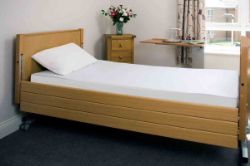
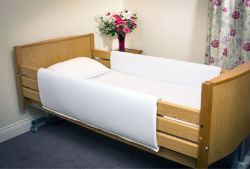
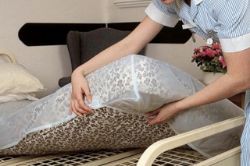
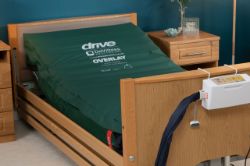
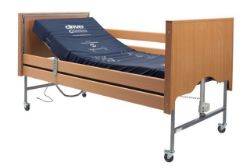
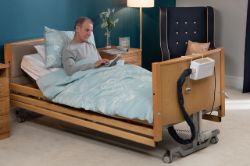
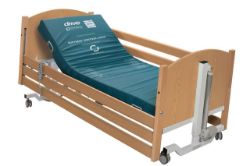
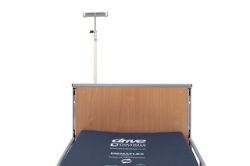
Pressure relief mattress system in a care setting
How a pressure relief mattress works
Pressure ulcers can develop when skin and underlying tissue are exposed to pressure, or pressure combined with shear, for long enough to damage tissue. A pressure relief mattress changes how the body is supported so that weight is spread more evenly and prolonged pressure on vulnerable areas, including the heels, hips and base of the spine, is reduced.
Foam mattresses conform to the body, dynamic mattresses change which air cells support the body during a cycle, and hybrid mattresses combine foam with air-cell technology. The mattress should form part of an individual care plan and does not replace repositioning, skin checks or professional assessment where required.
Key benefits of a pressure relief mattress
· Redistributes pressure: Spreads weight more evenly and reduces prolonged pressure on vulnerable areas.
· Supports pressure-ulcer prevention: Can form an important part of a wider pressure-care plan for people at increased risk.
· Improves comfort: May make longer periods spent in bed more comfortable by reducing concentrated pressure.
· Offers different levels of support: Static, dynamic and hybrid options meet different assessed needs and care environments.
Types of pressure relief mattress
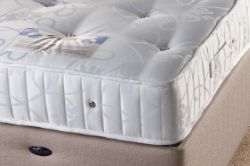
Static foam mattresses
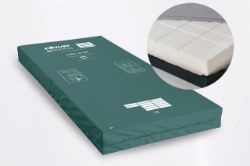
| Static pressure mattresses, often made from specialist foam, redistribute pressure continuously without requiring electricity. They are quiet and straightforward to use, but the mattress must still be suitable for the person’s needs, weight and bed. |

Dynamic alternating pressure mattresses
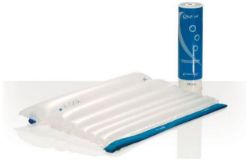
| Dynamic pressure mattresses use an electric pump to inflate and deflate air cells in alternating cycles. This regularly changes where pressure is applied. The pump should be set up according to the manufacturer’s instructions. |

Hybrid mattresses
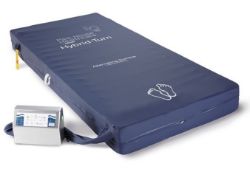
| Hybrid mattresses combine foam with air-cell technology to provide pressure redistribution through both materials. Some can be used as a foam mattress and connected to a compatible pump when powered support is required. |

Static dynamic and hybrid mattresses compared
Type | How it works | Key consideration | Suitable HCD product |
Static foam | Foam conforms to the body and spreads load continuously. | No pump; check dimensions, user-weight capacity, cover and bed compatibility. | MAT10BE Drive DeVilbiss High Risk Castellated Foam Mattress |
Dynamic | A pump alternately inflates and deflates groups of air cells. | Requires power, correct setup, alarm response and a power-cut plan. | Air on Air Active Mattress System with Theia Digital Pump |
Hybrid | Foam provides continuous support; air cells add powered therapy when connected. | Confirm whether the pump is included and compatible with the surface. | Hybrid-Power Mattress System with Theia 2 Digital Pump Unit |
Who may need a pressure relief mattress
A pressure relief mattress may be suitable for someone with limited mobility, reduced sensation, fragile skin or difficulty repositioning independently. The appropriate type depends on the person’s assessed risk, skin condition, mobility, weight, comfort and care environment.
NICE recommends a high-specification foam mattress for adults at high risk of developing a pressure ulcer and advises considering a dynamic surface where foam does not redistribute pressure adequately. A pressure relief mattress does not replace repositioning, skin inspection or treatment of an existing wound, and compatibility with the bed and any rails must also be checked.
Relevant Healthcare Direct products
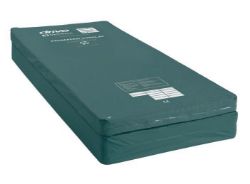
MAT10BE Drive DeVilbiss High Risk Castellated Foam Mattress - ROLLED
A static castellated foam mattress for care settings or home care where a non-powered pressure-redistributing surface has been selected following assessment.
View the MAT10BE Drive DeVilbiss High Risk Castellated Foam Mattress - ROLLED
Air on Air Active Mattress System with Theia Digital Pump
A full replacement dynamic system combining a cell-on-cell air mattress with a compatible digital pump for powered alternating support.
View the Air on Air Active Mattress System with Theia Digital Pump
Hybrid-Power Mattress System with Theia 2 Digital Pump Unit
A hybrid surface combining castellated foam with alternating air cells, allowing powered support to be introduced without replacing the mattress.
View the Hybrid-Power Mattress System with Theia 2 Digital Pump Unit
Safety and limitations
Pressure relief equipment can support, but cannot by itself prevent or treat, a pressure ulcer. Use the mattress specified in the person’s assessment and care plan, follow the manufacturer’s setup, cleaning and servicing instructions, and continue required repositioning and skin checks. Seek clinical advice promptly if skin is discoloured, hot, swollen, painful, broken or deteriorating.
For a powered mattress, check that staff understand the controls and alarms, that tubing is not kinked, and that the power cable is routed safely. Keep the manufacturer’s power-failure instructions available. Do not place an extra mattress or unapproved topper over a pressure-relieving surface, because this may change its performance. Check compatibility with the bed, rails, sheets and evacuation equipment.
Frequently Asked Questions
1. What is a pressure mattress used for?
A pressure mattress redistributes pressure across the body and can help reduce the risk of pressure ulcers. It is commonly used for people with limited mobility or those who spend long periods in bed.
2. What is the difference between a static and dynamic pressure mattress?
A static mattress provides continuous pressure redistribution, usually using specialist foam. A dynamic mattress uses powered air cells that inflate and deflate in cycles to regularly change where pressure is applied.
3. Do pressure mattresses need a pump?
Not all pressure mattresses need a pump. Static foam mattresses work without electricity, while dynamic mattresses generally require a pump. Some hybrid mattresses can work without a pump and add powered support when one is connected.
4. How do I choose the right pressure mattress?
Consider the person’s mobility, pressure-ulcer risk, weight and care environment. Check the mattress dimensions and maximum user weight, and seek professional advice if the person has significant or complex pressure-care needs.
5. Does a pressure mattress prevent pressure ulcers?
No mattress can guarantee that pressure ulcers will not develop. A suitable mattress can help reduce pressure, but repositioning, skin checks and other elements of the care plan may still be needed.
6. Can a pressure mattress be used on any bed?
Not always. Check the mattress dimensions, bed compatibility, maximum user weight and any bed-rail requirements before use.
7. What happens to a dynamic mattress during a power cut?
This depends on the mattress system. Follow the manufacturer’s instructions and make sure carers know what to do if the power or pump fails.
8. How should a pressure mattress be cleaned?
Follow the manufacturer’s cleaning instructions. Check the cover regularly for damage, staining or fluid entering the mattress, and replace damaged parts where necessary.
Next step
View Healthcare Direct’s static foam mattresses, dynamic mattresses and hybrid mattresses. If you have any questions about our pressure mattresses or need help choosing the right option for your needs, our friendly team at Healthcare Direct is always happy to help. Simply give us a call on 0208 236 0060 and we'll be happy to assist.
References
National Institute for Health and Care Excellence. Pressure ulcers: prevention and management (CG179) (accessed 22 September 2026).
NHS. Pressure sores (pressure ulcers) (accessed 22 September 2026).
Drive DeVilbiss Healthcare. MAT10 product specifications (accessed 22 September 2026).
Healthcare Direct. Dynamic, hybrid and profiling bed foam mattress product pages





Leave your comment